Covenant vs Contract Marriage: What Changed
Most Christian couples know marriage is a covenant. We were reducing ours to a consumeristic contract. And it was destroying us.
By Shawn Reddy
When Tawhiwhi and I got married, we already knew the language. We had done the premarital sessions. We had read the books. We believed we were walking into something sacred. But within two months, the cracks began to show and we were in the same exhausting conflict on repeat. And slowly I began to realise that knowing the right theology and actually living it are two completely different things.
I need to be honest with you about something I carried into our marriage.
I came in from a background of helping people. Counselling. Supporting people through difficult situations. So I thought I had the tools. I thought I was going to be able to fix this.
I realised pretty quickly I could not fix anything.
The honeymoon period was over. The disagreements. The arguments that would run into the early hours of the morning. We would go a couple of good days, then fight, and it would take a week to recover before the cycle started again. That whole first year we were both deeply unhappy and completely exhausted. Just when you recover from a fight, you are back in the same place.
And the more I tried to fix Tawhiwhi, the worse things got.
“The more I tried to fix you, the worse things got. It wasn’t my job to fix her. It wasn’t my job to be the counsellor.”
The Breaking Point
We hit breaking point overseas. We were three months travelling, and we found ourselves in the south of France, on one of the most beautiful coastlines in the world. And we were arguing. Fighting for our corners. Not enjoying any of it.
You can change your location. You can go on the most amazing trip. But if you are struggling, it does not matter where you are. You bring all of it with you. That is exactly what we did. We thought the trip might be a second honeymoon. Instead, being together twenty four seven brought out every tension we had bottled up and never properly dealt with.
It was harder still because we had just found out Tawhiwhi was pregnant with our son Benjamin. She was in her first trimester, sick most days, exhausted. Another layer of complexity on a marriage that was already straining.
And I was frustrated. Because from my side, everything felt like an issue, and I could see she was unhappy. But instead of letting her work through what she needed to, I went into fix-it mode. I rationalised. I showed her where she was going wrong. And a lot of the time, technically, I was right. But I was wrong in my approach. It was almost like I was the counsellor and she was the one being counselled.
For Tawhiwhi, that was its own kind of pain. She felt dismissed. Like a child. Not heard, not given the space to actually work through anything.
Why I Really Could Not Let It Go
It took me a long time to understand why I could not just sit with her in the hard moments.
I grew up in a home and watched my parents have a really difficult marriage. And it freaked me out that this might be a lifetime of difficulty. Tawhiwhi came from a broken family too. So the only picture of marriage either of us really had was one of struggle and failure.
That fear was driving me. When conflict went unresolved, it did not just feel uncomfortable. It felt like proof that we were heading the same way our parents had. So I pushed to resolve everything as fast as I could, when what the moment actually needed was tenderness. I was not responding as a husband. I was reacting out of my own past, out of the fear of that little boy who grew up watching it all fall apart.
Most men do this. We go into fix-it mode. We are driven by our own insecurities and our inability to recognise that we are being triggered in the moment. And instead of responding out of love, we respond out of a need to protect ourselves. To protect our ground.
But marriage asks you to lay your life down for the other. Even when you are hurting, you have to learn to put yourself second to meet the needs of the other person.
The Fight That Was Never About the Fight
There is one argument that explains our whole first year.
We had plans one Friday night. Just the two of us. Tawhiwhi had even stopped to pick up dessert on the way home. Then a friend of mine flew into town and called with a spare ticket to a concert, and I really wanted to go. She told me, honestly, that it hurt. We argued. I went anyway.
But here is the thing. We were not actually fighting about the concert.
When we look back now, what it triggered in me was the feeling of being trapped and controlled. Growing up, I had felt controlled, and I hated it. So the moment I felt it again, I responded out of that place. Out of the fear of that little child who was being controlled. I am thirty years old, I told myself. I do what I want, when I want.
And what it triggered in Tawhiwhi was rejection. That was her inner child, the one who had grown up feeling that people leave. My wanting to go felt to her like being abandoned.
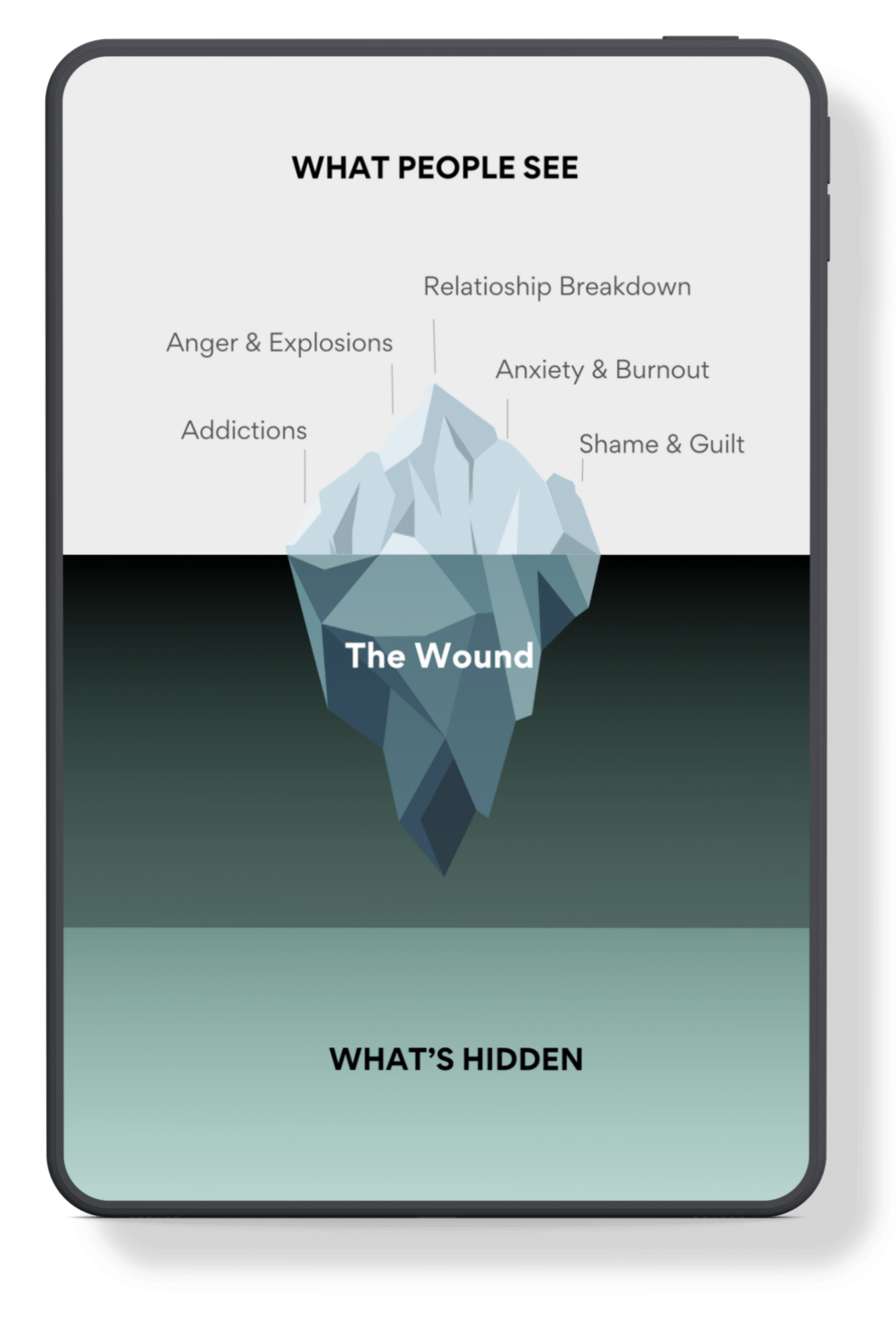
So we were not fighting about going out. We were fighting for the little child in each of us. And instead of fighting for each other, we were both fighting for ground, because we were afraid. I was afraid of being controlled. She was afraid of being rejected.
Until you recognise that this is what is going on in most fights, you keep fighting about the wrong issue.
“We weren’t really fighting about going out. We were fighting for the little child in each of us.”
Couples tend to argue about the same handful of things. Finances. Intimacy. Family and in-laws. Roles and responsibilities. Faith and values. But those are just the symptoms. Underneath is a deeper wound, a childhood wound you are carrying that you cannot address because you do not have the language, the tools, or the mentorship. So you can repeat the same cycle for years, fighting about the same issue, never getting to the root.
Marriage Is a Mirror
This is the thing I wish someone had told me before we got married.
Marriage did not create our problems. It revealed them.
When you get married, there is no other situation where someone sees all your brokenness, all your flaws, all the difficult things you are going through. If you are moody, they see it. You cannot cover it up. You cannot escape it. Marriage acts like a mirror.
That is why the honeymoon ends. Not because something is wrong with the other person, but because the mirror is now showing you your true self, and showing them theirs. And in that moment you get a choice. You can use the mirror to see and love, or you can use it to see and hide.
For most of that first year, I chose to hide. Instead of working it out, I fought for ground. I fought to cover my own insecurities. And when you do that, you do not create a safe place where two people can be emotionally naked and vulnerable. You create a space that is hostile.
The Bible talks about God as a refiner, a silversmith. In the heat and pressure of marriage, all the impurities rise to the surface. The anger. The pride. Things I did not even know were in me until I was a husband. That is not punishment. It is grace. Because only when those things surface can you take them before God and ask Him to remove them. If not for marriage, how else would they ever come up?
We Knew It Was a Covenant. We Were Living a Consumeristic Contract.
I want to be careful here, because this is where a lot of people get confused.
Marriage is a covenant. We say it in our vows. For better, for worse, till death do us part. But most of us do not actually understand what we are saying. And when life gets hard, we quietly slip into something else entirely. We start treating marriage like a consumeristic relationship.
A consumeristic relationship says: I will keep showing up as long as you are good. As long as you are stable. As long as you are well. It is like your local butcher. If the product is good, you keep going back. If the quality drops, you go somewhere else.
We do this to each other. We might never say it out loud, but we imply it. If you are not performing to my standard, if you are not meeting my needs, then I am frustrated, and I start to wonder whether I made a mistake.
I was so guilty of this. In fact, I was the first one to go to the place Tawhiwhi never went. In the middle of that hard first year, I started to question the vows I had made. I wondered if I had married the wrong person. And that is more serious than people realise, because that is where separation begins. That is where divorce begins. Not in the leaving, but in the questioning.
A covenant says something completely different. It says: I am with you no matter where you are at. No matter what you are doing. No matter how you are struggling. Even when you are being difficult with me, I am here. And not just for the person you are now, but for the person you are going to grow into.
That is exactly what God does with us. When we are struggling, when we are sinful, when we are angry with Him, He does not say, “You have done this and this, so today you are out.” He says, “You are mine.” And it is that grace, that steady love, that actually leads us to change. We do not change in order to earn the love. We change because we are already loved.
I was hoping Tawhiwhi would change. But I was the one who needed to change. I was treating our marriage like a consumer, and God told me to treat it like a covenant. When I started to do that, the marriage changed.
The Question That Shifted Everything
The turning point came halfway through that overseas trip.
I was crying out to God, frustrated, exhausted. And I had this realisation, almost like the Lord spoke it to me. If Tawhiwhi never changes, I will still be okay. My happiness is not based on her happiness. My joy, my peace, my sense of contentment, it comes from the Lord.
I want to be precise about what that meant, because it is easy to misread.
It was not that I wanted Tawhiwhi to make me happy. It was that her unhappiness was making me unhappy, and so I was trying to fix her and fix the situation so that I could finally feel okay. The question God put to me was harder than that. Could I find peace even while she was still unhappy? Could I depend on the stability and the joy of the Lord enough to give her the space to work through her things, and support her for as long as she needed, without needing her to be okay first?
That recognition let me love Tawhiwhi without needing her to change. I handed her over to God. I stopped trying to fix it and said, “Lord, it is your job to work on her. Either way, I will love her. Either way, I will be okay, because you are enough for me.”
The shift was immediate. The pressure lifted off our marriage. Suddenly there was space. Space for us to breathe and connect. Space for Tawhiwhi to work through what God was doing in her without feeling like she was failing every day.
She felt it too. For the first time, she could be emotionally naked with me and not feel judged or criticised for how she felt. And that safety is what finally let us share our stories with each other at a depth we never had before.
The Shift From Me to Us
There is one more thing covenant marriage asks of you, and it is costly.
It asks you to move from what is best for me to what is best for us.
Culture trains us in the opposite direction. It says put your needs first, put your interests first, because no one else is going to look after you. Everything around us insists that we are the most important person in the room. Covenant marriage asks you to lay that down. To give up your autonomy for the sake of being united with another person.
Tim Keller writes in The Meaning of Marriage that self-centredness is the root issue in most marriages. Not communication styles. Not financial incompatibility. Selfishness. The deep, often invisible belief that my needs are the most important needs in the room.
The hardest version of this is in the middle of a fight. To consciously stop and ask: how do I serve her right now? Where is she at? Why is she being triggered? Why am I being triggered? How do I put myself second here?
When we started doing that, our fights began to lessen. Not because the issues disappeared, but because we could come back together after the tension and actually serve each other in that space. We were no longer sitting in the tension forever.
There is a dying of self that has to happen in marriage for it to flourish. It is sanctifying. It files down your rough edges and makes you more like Christ, if you let it.
What Actually Keeps Us Out of the Old Patterns
We still fight. I want to be clear about that. Even now, knowing everything we know, I trip up and treat the marriage like a consumer. I expect Tawhiwhi to perform when things are hard for her. I get triggered.
But we do not fight like we used to. And it comes down to a few things we keep choosing.
First, we do the inner work. This is the non-negotiable one. You have to reflect on your own life, your own issues, the childhood trauma underneath your reactions. For me that meant recognising that control was a massive wound, and that there were layers to it I am still working through. The more I do that work, the more I am able to love Tawhiwhi and be sensitive to her needs instead of reacting. You cannot offer love and care out of a place of unhealed brokenness.
Second, we live with understanding. First Peter talks about living with your spouse in an understanding way. You cannot understand how someone reacts, or why they think the way they do, without knowing where they have come from. Their childhood. Their parents. The deep things. Taking the time to truly understand who your spouse is has been one of the most important tools in our marriage.
Third, we pursue God together, and personally. Life changes us. The person you married is not the same person years later. The only thing that keeps you anchored is moving in the same direction, and for us that direction is faith. Everything else can go wrong, but our own personal walk with the Lord is what brings us back. We try to pray together each night. It does not always happen. But we are pointed the same way.
Your Next Step
If any of this resonates, if you are stuck in the same fights on repeat, if you feel more like opponents than partners, if you are exhausted and wondering when it gets easier, I want you to know something.
It does not have to stay this way.
We go much deeper on all of this in Episode 01 of The Formational Show. Tawhiwhi and I talk through our first year, the breaking point overseas, and everything we learned on the other side of it.
→ Listen to The Formational Show | Did I Marry the Right Person?
One of the most powerful things you can do is sit down and actually share your stories with each other. Take an afternoon. Phones off. No judgment, no questions, no rebuttals. One person shares their story, their childhood, the things that shaped them, and the other simply listens and loves. Then you swap on another day. It will give you the understanding to stop reacting out of your own triggers and start seeing the wounded child your spouse is actually fighting for.
To make that easier, we put together a free guide called Tell Your Story that walks you through exactly how to do it.
→ Download the free Tell Your Story guide
And if you want to go deeper on your own story, the childhood wounds and the root issues underneath your reactions rather than just the symptoms, our Emotional Wellness Course is built for exactly that. It is the same course we both worked through, where we share our own brokenness and how the Lord met us in it.
You are not alone in this. And your marriage is worth the work.